There is something quietly disappearing from Indian cities. The grand havelis of Rajasthan are crumbling. The intricately carved wooden balconies of old Ahmedabad are being replaced by concrete. The aangan — that open courtyard at the heart of the traditional Indian home — has been swallowed by apartments and parking lots.
Esmaric was born from this exact grief — and this exact love. The Architectural Lamp Series is not just a product line. It is an act of preservation. Each lamp is a miniature monument to a form of Indian architecture that deserves to be remembered.
What Is an Architectural Lamp?
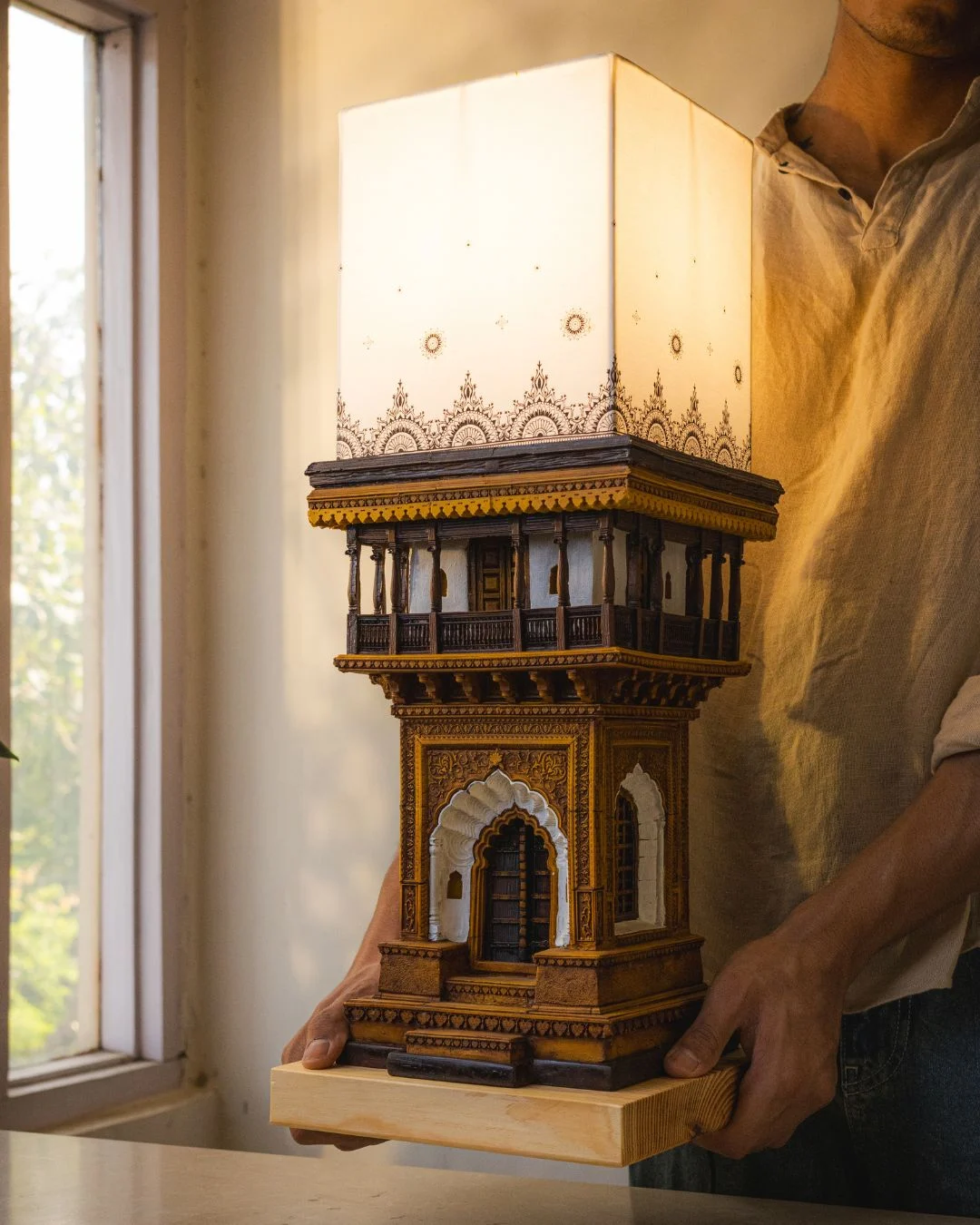
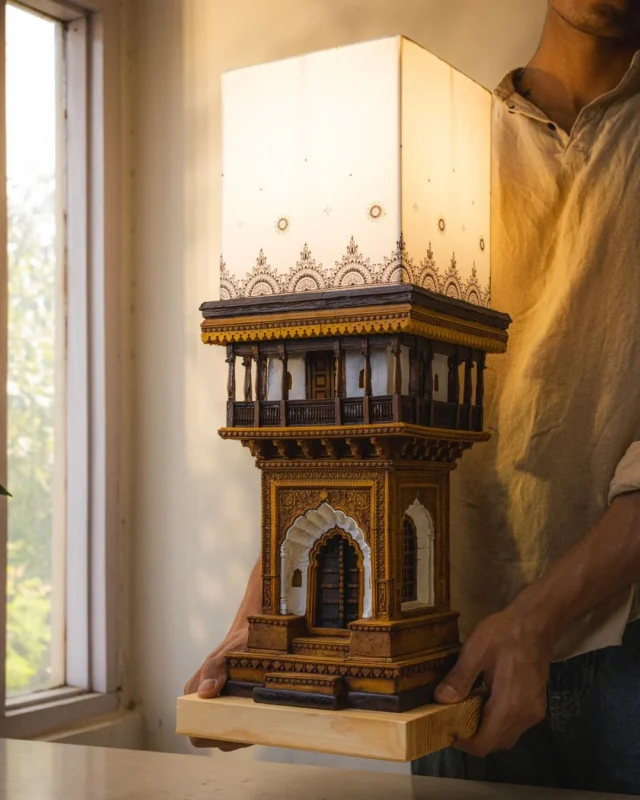
An architectural lamp combines two things: a handcrafted miniature base inspired by Indian architectural heritage, and a fabric lampshade that casts warm, ambient light. The result is something that functions as a lamp but feels like a collectible art object — a piece of heritage design that works in a modern home.
The base of each lamp is not a generic decorative shape. It is a carefully designed interpretation of a real architectural tradition — the haveli, the aangan, the palace of Jaipur. Every detail has a reference. Every curve has a reason.
The Aangan Lamp — Memory of the Indian Courtyard
The aangan — the open courtyard at the centre of the traditional Indian home — was not just an architectural feature. It was the emotional core of the house.
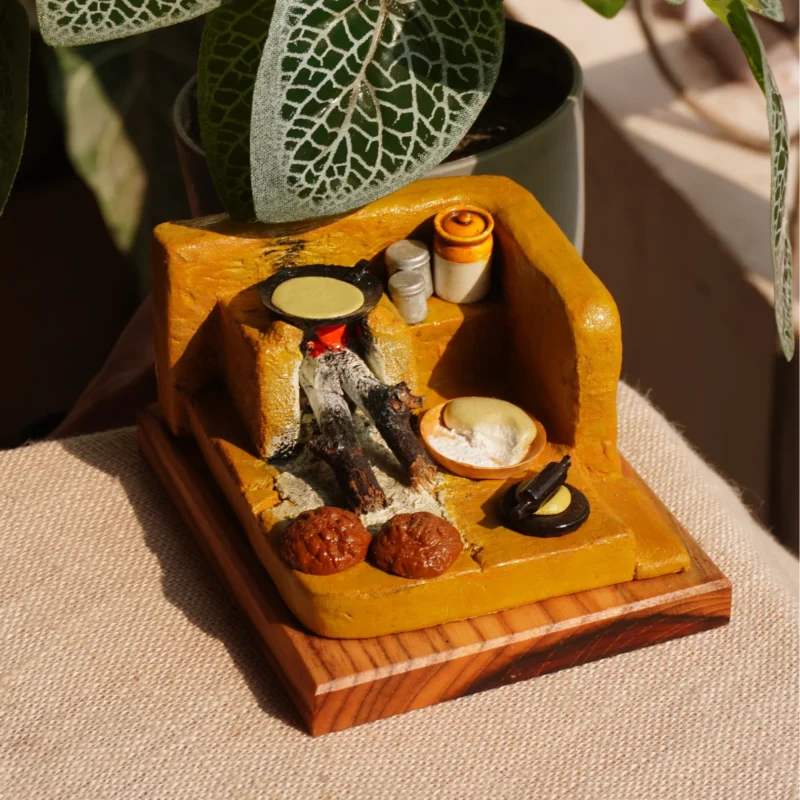
In the aangan, families gathered for festivals. Children played under the open sky. Grandmothers dried papad in the afternoon sun. Weddings were celebrated. Stories were told. The aangan was where Indian domestic life actually happened — not in the rooms around it, but in the open, breathing centre.
Today, the aangan has largely disappeared from urban Indian life. Apartment buildings have no space for courtyards. The joint family that animated the aangan has been replaced by nuclear households. A whole way of life has quietly vanished.
The Aangan Lamp is Esmaric’s tribute to this lost space. It captures the essence of the traditional courtyard — the arched doorways, the open sky, the warmth — in a handcrafted lamp that brings that emotional memory into any modern home.
The Seher Haveli Lamp — The Architecture of Indian Grandeur
The great havelis of North India — Rajasthan, Haryana, Uttar Pradesh — are among the most spectacular examples of domestic architecture anywhere in the world. These were not palaces. They were homes — homes built by merchants, nobles, and wealthy families who poured their wealth and their aesthetics into every surface.
A traditional haveli was a universe unto itself. Multiple courtyards. Elaborate facades carved in sandstone or lime plaster. Jharokhas — projecting balconies with latticed screens — that allowed the women of the household to observe the street below without being seen. Massive arched gateways. Rooms decorated with frescoes, mirror work, and tile.
Walking through an old haveli in Shekhawati or the lanes of Jaisalmer is an experience that stops time. You feel the weight of generations — the ambition, the craftsmanship, the love of beauty — in every carved surface.
The Seher Haveli Lamp distils this architectural grandeur into a collectible object. The base captures the layered facade of the haveli — the arches, the proportions, the sense of depth — in handcrafted miniature form. When lit, the warm glow of the lamp transforms any corner of a room into something that feels ancient and alive.
The Jaipur Lamp — The Pink City in Light
Jaipur is one of the most architecturally distinctive cities in the world. The pink sandstone that colours its buildings was decreed by Maharaja Ram Singh II in 1876, who painted the entire old city pink to welcome the Prince of Wales. The colour stuck — and today Jaipur’s old city is a UNESCO World Heritage Site, its buildings glowing amber and rose in the afternoon sun.
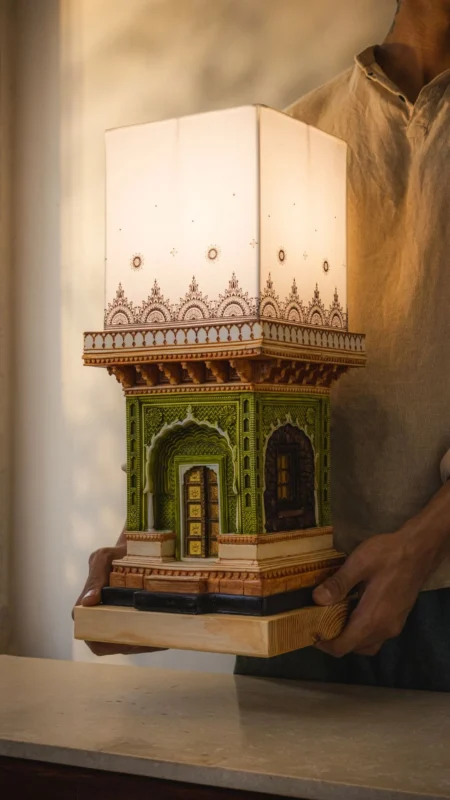
The architecture of Jaipur is Rajput grandeur at its finest: arched openings, ornate jharokhas, carved stone lattice screens (jaalis), and the rhythmic repetition of arched facades that give the city its unique visual identity.
The Jaipur Lamp captures this architectural language — the arches, the warmth of pink stone, the layered facades — in a handcrafted lamp that brings the essence of the Pink City into your home.
Why Architectural Heritage Lamps Are the Future of Indian Home Decor
Indian home decor has for too long oscillated between two extremes: imported minimalism that has no connection to Indian culture, or heavy “ethnic” decor that feels costume-like rather than genuinely beautiful.
Esmaric’s Architectural Lamp Series offers a third path: objects that are modern in function, premium in quality, and deeply rooted in Indian heritage in their design language. They work in a Mumbai apartment and a Delhi bungalow. They work in an Indian home in London or New Jersey. They carry a story without shouting about it.
This is what design-led heritage preservation looks like. Not a museum piece behind glass. A beautiful, functional object in your home that carries the memory of Bharat every time you turn it on.
Explore the Architectural Lamp Series
The Aangan Lamp, Seher Haveli Lamp, and Jaipur Lamp are available now at esmaric.in. The Gopuram Lamp — inspired by the towering gateway towers of South Indian temples — is currently under development.
Each lamp is handcrafted, shipped pan-India, and available with Cash on Delivery.
Created by Esmaric — preserving the Essence of Bharat through handcrafted collectible art. Last updated: June 2026.